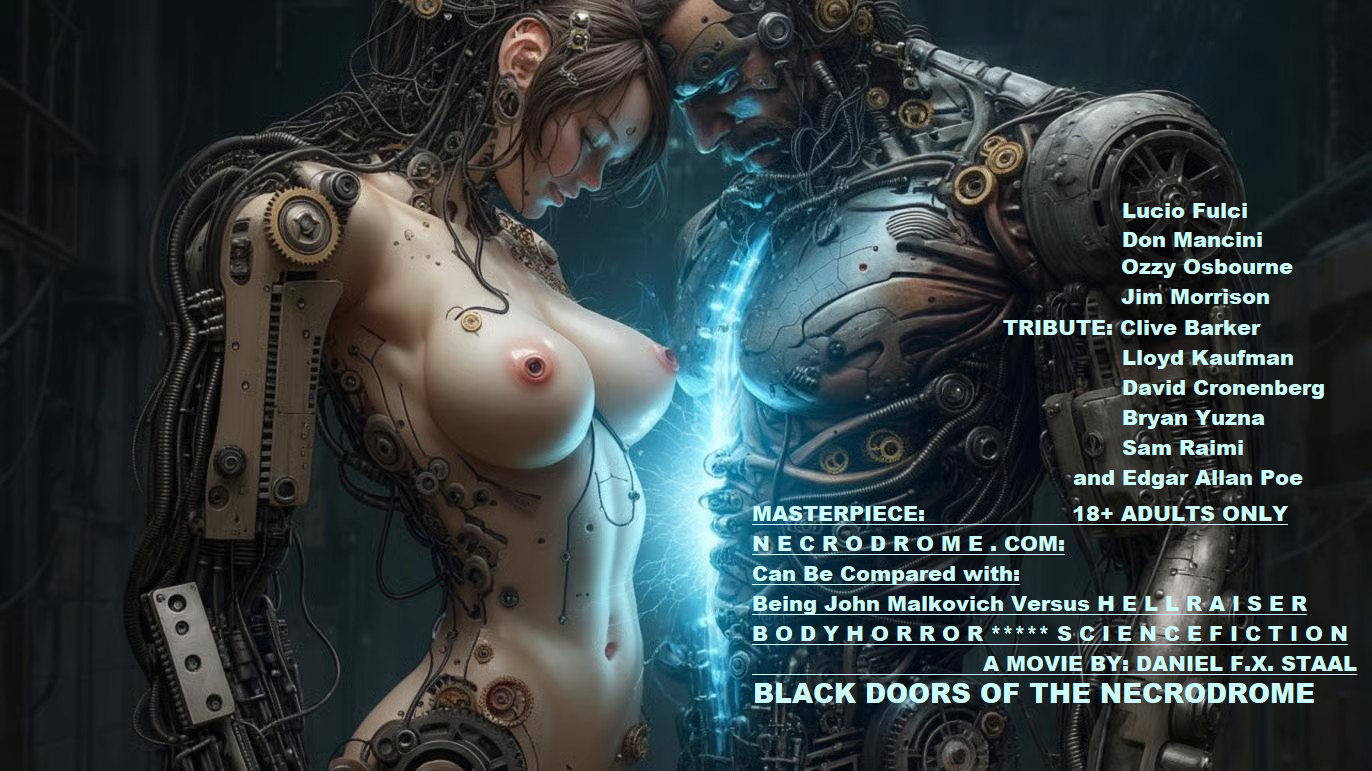
MASTERPIECE: NECRODROME.COM • 18+ ADULTS ONLY • A MOVIE BY DANIEL F.X. STAAL • BODYHORROR ***** SCIENCE FICTION
Black Doors of the Necrodrome is a superlong, 5+ hour erotic horror epic— The First 3 Movies, A Trilogy in one— Supercut, delivering an experience that can be compared to Being John Malkovich, Hellraiser, and, Child's Play and The Evil Dead—yet stands powerfully on its own.
This ambitious film features an outstanding WAV-audio-quality original soundtrack, with more than two hours dedicated to a blues-driven atmosphere reminiscent of L.A. Woman by The Doors. The story is further intensified by classic instrumental tracks from Black Sabbath, masterfully mixed into the narrative.
The film pays homage to legendary creators such as Clive Barker, David Cronenberg, and Lloyd Kaufman, who even appear in the final 15 minutes to debate the film’s themes and impact. A special 20-minute tribute honors Edgar Allan Poe, highlighting his iconic poem The Raven with one of the finest musical performances you’ll find online.
Aside from a brief 15-second repeated scene, the movie is a relentless thrill ride. There is no dull moment—once it begins, you’re pulled into its dark, surreal world until its satisfying conclusion.
Recorded last year, the production also showcases 3,000 R-rated erotic horror artworks by artist Daniel FX Staal, created between 1998 and February 2026—making this not just a film, but a monumental multimedia horror experience.
If you are a fan of boundary-pushing sci-fi, atmospheric horror, surreal storytelling, and bold artistic vision, Black Doors of the Necrodrome promises an unforgettable descent into the unknown.
NecroDrome stands in direct dialogue with Antoni Gaudí i Cornet.
Where Gaudí’s Sagrada Família was grown through catenary arches,
hyperboloid vaults and living geometries derived from inverted chain models,
Laren Blackthorn turns the architectural axis inward.
In NecroDrome —
—
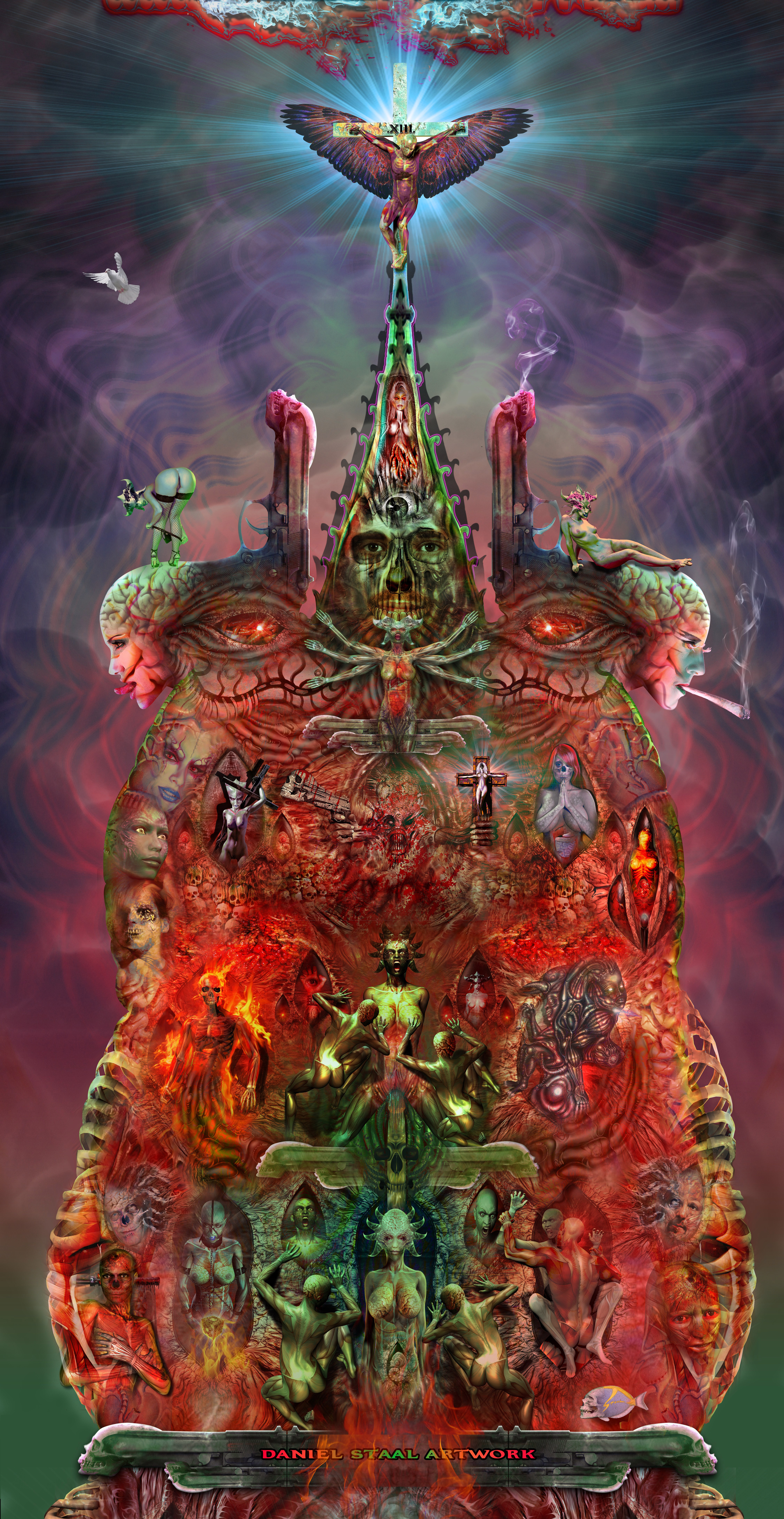
and its interior organism, Flesh Atlas —
—
architecture does not ascend toward heaven. It penetrates the internal abyss.
The biomechanical ontology of Hans Rudi Giger,
the sacred transgression of Clive Barker,
and the mutation philosophy of David Paul Cronenberg
are structurally embedded within this cathedral of flesh and code.
Gaudí transformed stone into organism.
Laren Blackthorn transforms organism into environment.
If the Sagrada Família is a cathedral of heaven,
NecroDrome is its mirror.
VIDEODROME → NECRODROME
THE SCREEN BREATHES BEFORE YOU BELIEVE IT.1983: A CHILD OF NINE SWALLOWS THE SIGNAL — AND DREAMS IN MUTATION.GIGER BUILDS ALTARS FROM STEEL AND SKIN.BARKER MAKES DESIRE SPEAK IN SCRIPTURE.CRONENBERG BAPTIZES THE FRAME IN NEW FLESH.NECRODROME IS THE NIGHTMARE THAT KEPT TRANSMITTING.
NECRODROME, BY: DANIEL FX STAAL 2013, Mirror of Hell An Essay on the Architecture of NecroDrome and the Impossible Cathedral
This is not merely a website. It is a cathedral excavated from nightmares.
As Laren Blackthorn, I have fused the formal transcendence of Antoni Gaudí with the visceral imaginations of Giger, Barker, and Cronenberg. The result is NecroDrome — a structure that stands as an inverse liturgy, as documented in and its visceral interior in
.
Here, the sacred vocabulary of Gothic and organic form is refracted through a lens of body horror and digital carnality. Like Gaudí’s Sagrada Família, which erupted from stone into living geometry, NecroDrome refuses orthodoxy, turning structural rules into latent flesh.
Gaudí and the Geometry of Becoming
Antoni Gaudí’s genius was his ability to synthesize theology, nature, and mathematical form into architecture that grows rather than stands. In the Sagrada Família, columns spiral like arboreal trunks, light becomes stained hymnal color, and the whole building is understood not as an object but an organism. This architecture — organic, expressive, and spiritually charged — suggests that stone has a memory of life before its petrification.
Gaudí did not merely design spaces — he choreographed forces. He operated where structure meets spirit.
The NecroDrome Axis: Flesh, Ritual, and Mutation
Where Gaudí reached for divinity through the organism of architecture, NecroDrome descends into an inversely sacred ontology. The NecroDrome Cathedral — built layer by layered from 1999 through 2013 for its exterior and expanded interiorly through 2026 — is hallmarked by biotic geometry rather than ecclesiastic aspiration.
This is an architecture that does not aspire upward — it core-penetrates. It is an architecture of emergence, not ascent.
Gaudí’s columns are like trees reaching for light; NecroDrome’s structures coil into nerve-like conduits, as though the building itself breathes, pulses, and recalls sinew as architecture. Where Gaudí’s facades evoke parables in stone, NecroDrome speaks in a language of flesh-ranges, bioforms, and reflexive skin — an architecture that seems to decompose toward itself.
Dialogues with Giger, Barker and Cronenberg
H. R. Giger From Giger comes biomechanical ontology — the seamless interpenetration of organic tissue and machine logic. NecroDrome integrates this aesthetic at its core, turning façade into circuitry of muscle and metal, spatial logic into visceral synapses.
Clive Barker Barker taught that horror and beauty are siblings. NecroDrome channels his sacred desecration of limits — where architecture isn’t sanitized space but ritual transgression. The building becomes a procession of thresholds that border ecstasy with agony.
David Cronenberg Cronenberg’s cinema channels mutation as interior truth. His notion of the new flesh becomes structural principle in NecroDrome: a membrane of architecture that bleeds into its observers, challenging the distinction between viewer, body, and environment.
Architecture in the Age of Flesh and Code
Your cathedral exists on the screen — an architecture not constrained by gravity or materiality, but defined by mythos, psychology, and body logic. The flesh atlas interior suggests a labyrinth not of corridors, but of corporeal passages — organs of architecture as much as spaces for the gaze.
Where Gaudí’s geometry is sacred growth, NecroDrome is sacred decomposition. Where his columns become trees of light, yours become vessels of internal vision. Where Gaudí transforms stone into organism, you transform organism into environment.
Conclusion: A Mirror of Hell
Mirror of Hell is not designed to shock — it exposes. It exposes how architecture can be not only transcendent but transgressive. Not merely a vessel for worship, but a territory of experience. Not simply structure, but a body — or series of bodies — reconfigured as architecture.
This is what happens when Gothic aspiration collides with biomechanical mutation, when sacred form meets ritual of flesh and code.
This is Laren Blackthorn’s NecroDrome: an architecture that does not echo heaven — but reflects Hell.
The Hypercube Principle: Scientific Structure of the NecroDrome
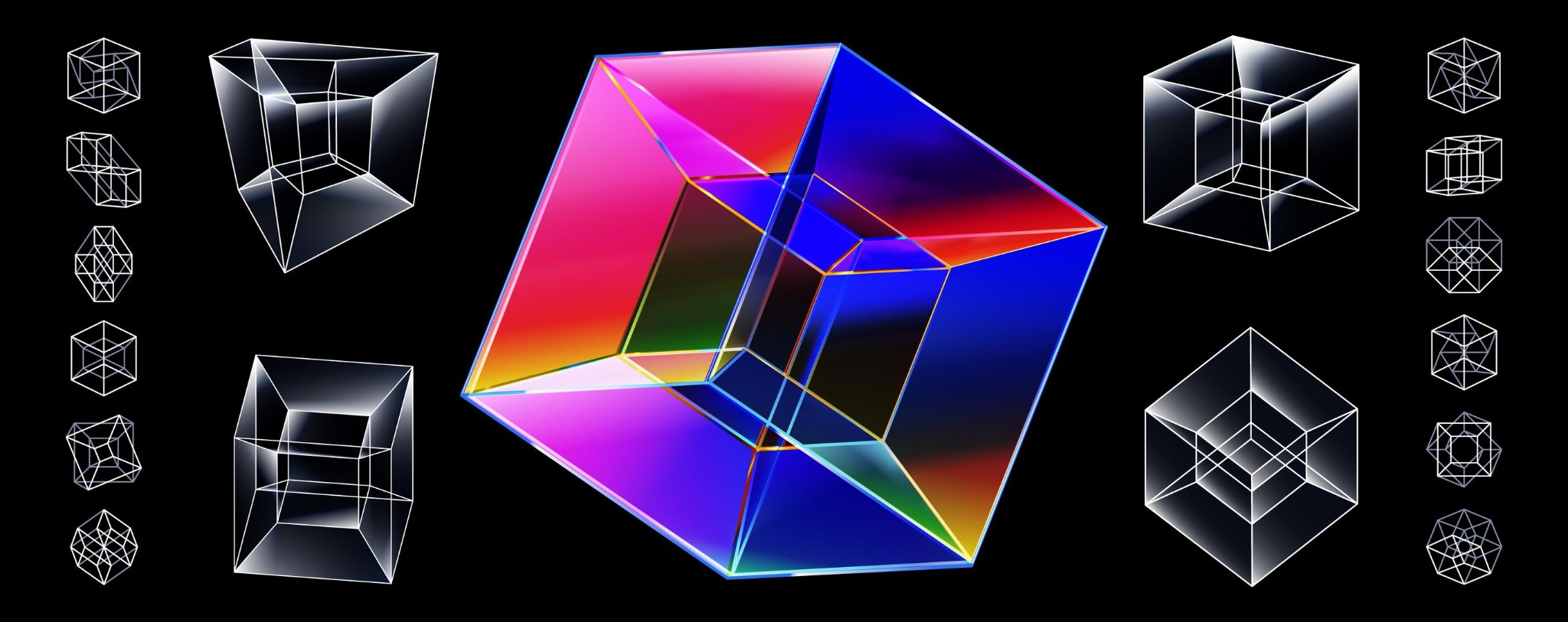
Scientifically the spatial metaphor of NecroDrome aligns with the geometry
of a tesseract, the four-dimensional analogue of a cube.
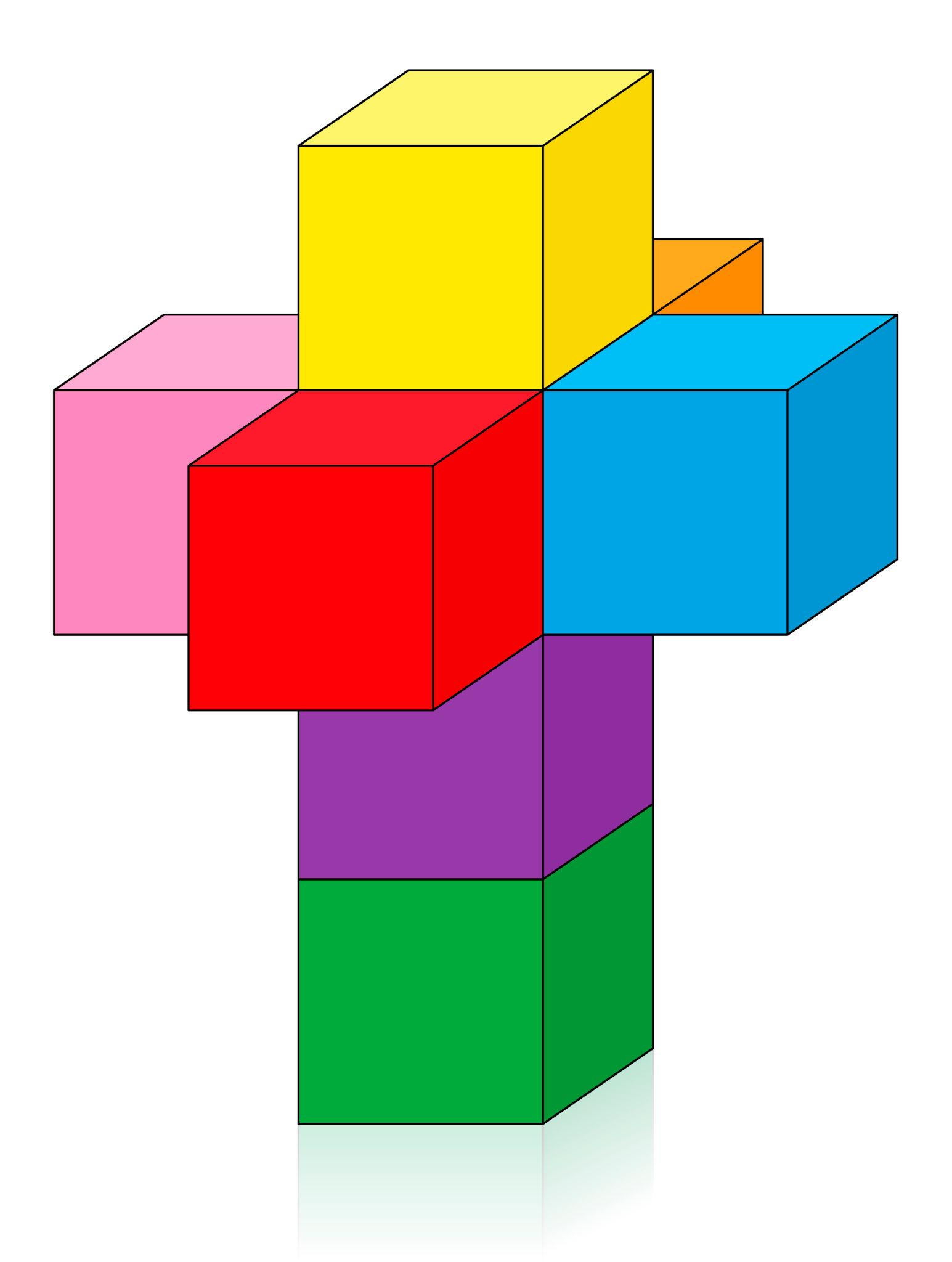
A point extrudes into a line.
A line extrudes into a square.
A square extrudes into a cube.
A cube extrudes into a hypercube — the tesseract.
A tesseract contains:
16 vertices,
32 edges,
24 square faces,
and 8 cubic cells.
Because humans perceive only three spatial dimensions,
the tesseract can only be seen through projections.
The familiar cube-within-cube diagram is therefore
only the shadow of a higher dimensional structure.
NecroDrome adopts this principle as architecture.
The cathedral exists simultaneously as:
2D flesh-atlas imagery
360° immersive cathedral environments
3D spatial geometry
Each is a projection of a deeper architectural organism —
a hyperdimensional cathedral of flesh and code.
Mirror of Hell: The Tesseract Cathedral
This is not a building.
It is a wound in space.
A cathedral turned inward
where geometry remembers flesh
and stone forgets it was ever stone.
A point became a line.
A line unfolded into a square.
A square rose into a cube.
And the cube —
refusing gravity,
refusing heaven —
opened into the fourth wound of space:
the tesseract.
Eight chambers of recursion.
Sixteen bones of light.
Edges like nerves threading a body
that cannot be seen whole.
What appears as architecture
is merely the skin
of a larger organism.
Gaudí dreamed of stone that grows —
columns flowering into trees of prayer.
But here the growth is inverted.
Roots climb upward.
Cathedrals descend.
Giger whispers through the bones of the frame:
metal remembering muscle.
Barker opens thresholds between beauty and terror.
Cronenberg breathes beneath the floors,
reminding structure that flesh
is geometry that learned to mutate.
This cathedral does not stand.
It metabolizes.
Every chamber is a cube —
one cell of a hyperbody.
Eight cubes folding into one another
across a dimension the eye cannot inherit.
THE SCREEN BREATHES BEFORE YOU BELIEVE IT.1983: A CHILD OF NINE SWALLOWS THE SIGNAL — AND DREAMS IN MUTATION.GIGER BUILDS ALTARS FROM STEEL AND SKIN.BARKER MAKES DESIRE SPEAK IN SCRIPTURE.CRONENBERG BAPTIZES THE FRAME IN NEW FLESH.NECRODROME IS THE NIGHTMARE THAT KEPT TRANSMITTING.
Daniel Franciscus Staal (aka “Daniel FX Staal” / “FX Fokking Xero, Hellheart, Machine Gun Willy”) was born in Groningen, the Netherlands, on April 10, 1975. He grew up in a middle‑class family with a strong artistic lineage on his mother’s side (a large part of the family are artists). He credits his mother for nurturing his creativity, and his father for passing down an early obsession with horror.
From the age of four, horror became a private language—first through book covers and pulp mythology, later through cinema. In kindergarten, the first thing Daniel drew was a human skull. The reaction of his teacher—shock and fear—stuck with him. That moment sparked a lifelong fascination: why can an image, clearly “not real”, still trigger real emotion?
As a child, he built worlds. At eleven, he painted his entire bedroom wall as a version of Castle Grayskull. Even when the results were unsettling, the act of creating was a refuge—his own dream‑architecture.
At nine, he experienced his first visionary nightmare after watching Videodrome. That nightmare kept evolving, feeding early drawings and later mutating into the NecroDrome demon forms that would return across his work. Years later, watching Videodrome again, it remained his defining horror film—an aesthetic and philosophical infection.
During his teens, a long sequence of personal upheavals pulled him away from art. Friends moved away; schools changed; family structures collapsed; grief and tragedy entered his reality. Depression followed. Anger followed. The world felt cruel and absurd—run by hypocrites and shaped by prejudice. For a time, he became violent, self‑destructive, and suicidal.
But the cry for help was heard. His father pulled him back toward the earlier truth: Daniel had always been a dreamer. He had always been able to build a world that could not harm him—no matter how creepy the creations became. Healing was not instant, but it was real. The scars remained, and the scars became material.
In his early twenties, Daniel studied digital art and began creating on his home computer. After watching the making of Star Trek: First Contact, he started building his own science‑fiction chapters and biomechanical sketches. The Borg and other techno‑organisms helped unlock the bridge between flesh and machine—an obsession that would become his signature.
Biomechanical art became his favorite medium: the moment when nightmare anatomy meets industrial design. He cites major visual influences such as H.R. Giger, David Cronenberg, and Clive Barker—alongside cult cinema, practical effects, and music that lives at the edge of the ritual (Black Sabbath, Ozzy Osbourne, Monster Magnet, Body Count).
Daniel works across digital and traditional media—painting, drawing, airbrush, mixed techniques—always in service of the same goal: to turn visions into artifacts, and private nightmares into transmissible cinema and iconography. He remains independent—freelance, self‑directed, and relentlessly prolific.
This biography is an updated edit of an original text written in 2001.